 Brisbane



-

Email Us
info@excellentbondcleaning.com.au
-

Quick Contact
+61 47 828 6100
Bond Cleaning in Older Queenslanders vs New-Build Apartments: What's Different
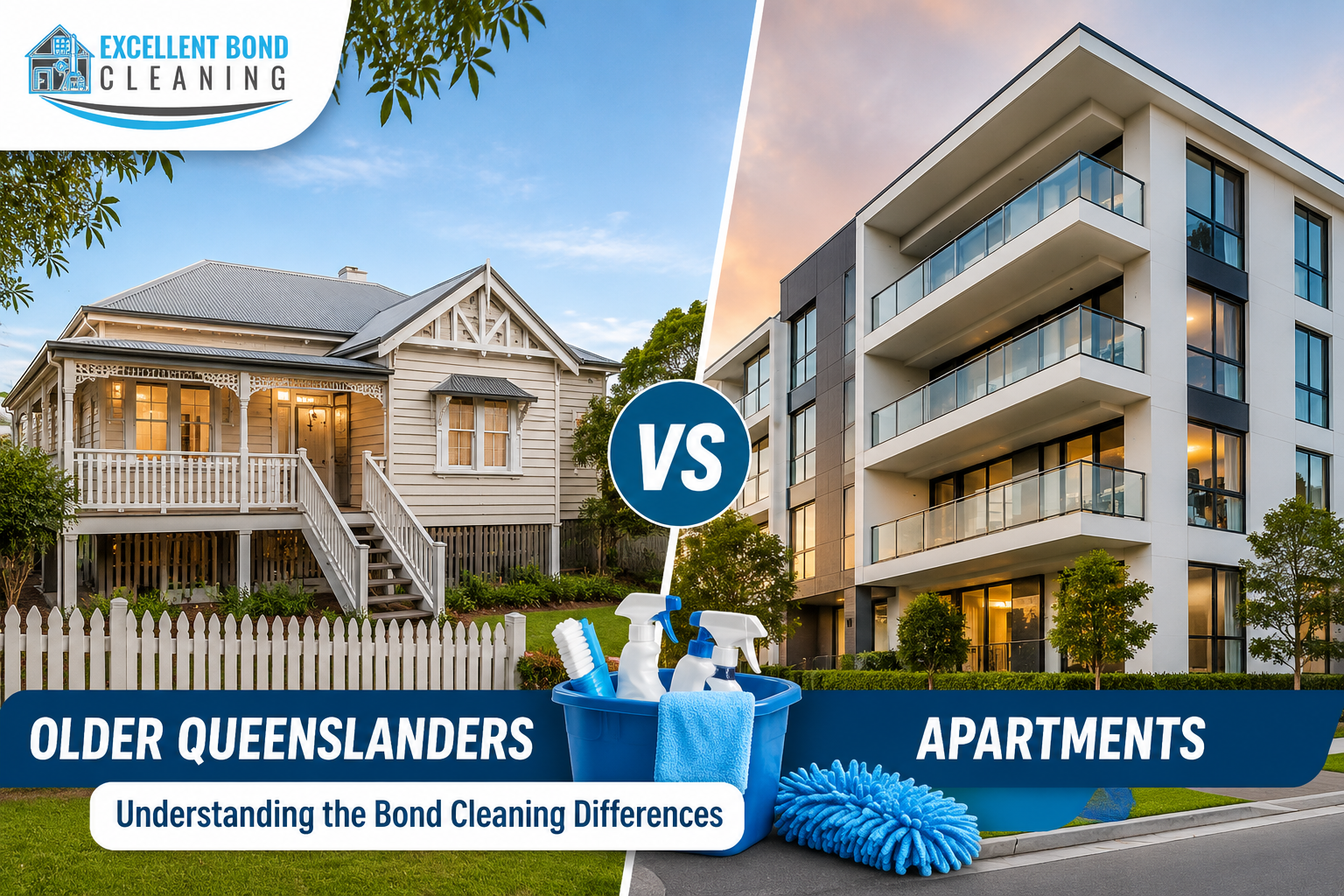
You are rarely moving out of your rental property with little more than a box of belongings and your keys in hand. But whether you're vacating a Queenslander or modern new-build unit, there is one very specific task that you may need to tackle: the end-of-lease bond clean . It seems simple enough, until you are actually doing the cleaning. What you actually need to do will vary incredibly depending on what kind of home you have.
Older Queenslanders that feature timber floors, verandahs, traditional plumbing fixtures, aging kitchens, and perhaps sometimes grimy features will typically have entirely different cleaning challenges than a crisp new unit with glass features, a sleek kitchen with modern appliances, and tight spaces. Understanding those different issues will help you devise a successful bond-cleaning plan to keep your landlord happy with your final inspection. In this overview, we'll be covering what you can expect from an end-of-lease bond cleaning service when moving from either a classic Queenslander or a modern unit, which items you should be particularly focused on, and how the Excellent Bond Cleaning team can ensure a smooth transition for you.
What Makes Bond Cleaning Different Between Older Queenslanders and New-Build Apartments?
Older Queenslanders tend to have timber features, large open rooms, verandas, older style kitchens and bathrooms as well as awkward areas where dirt and dust tends to accumulate. Over time, elements such as mold, old weathering, wear and tear and a collection of built-up grime can also present areas in need of focused attention.
While brand new apartments will generally sport new fixtures and modern finishes, they are not inherently easy to clean. Glass shower screens, stainless steel appliances, balconies, tiles, door tracks and compact spaces can all take time. A fingerprint, water mark, greasy stain, or a fine layer of building or daily dust can be highly obvious on a modern surface.
Major Points of Difference:
Construction and Materials: The use of different building materials such as timber versus modern glass may call for gentler cleaning approaches when cleaning an older style Queenslander compared to a new apartment.
Layout: Queenslanders tend to feature larger, airy rooms with stairwells and larger outdoor areas, while apartment layout usually involves smaller yet densely utilized spaces.
Accumulated Grime: Old properties will likely require more cleaning efforts to reach corners, vents, skirting boards, timber trimmings, and areas that were not frequently reached.
Modern Fixtures and Fittings: The inclusion of built-in appliances, modern glass fittings, stylish showerheads and numerous integrated components within apartment spaces mean additional cleaning tasks are typically included.
Outdoor Living Spaces: While many Queenslanders will have verandas or decks to be cleaned as part of a tenant's cleaning duties, a smaller balcony space for an apartment will demand a higher level of attention.
Older Queenslanders vs New-Build Apartments: Key Cleaning Differences
Here are the key differences:
Flooring: Queenslanders more commonly sport timber floors or aged carpets that require careful cleaning, whereas newer apartments are usually tiled, fitted with modern carpet, laminate or engineered flooring.
Walls & Surfaces: Older Queenslanders have surfaces that were originally painted, with classic trims and design details that need gentle cleaning. Newer apartments tend to have fresh paint on the walls needing only careful attention paid to any scuff marks, finger prints and dust build up.
Kitchens: Older homes often have kitchens that need deep cleaning after years of use, when you will see grease buildup and aged cabinetry and fittings, whereas a new apartment will require thorough cleaning around stainless steel appliances, glass stovetops, range hoods and cabinets.
Bathrooms: Queensland homes typically require additional effort in regard to cleaning old grouting, mould,ventilation issues and the cleaning of aged fittings, whereas apartments do benefit from a thorough clean of glass shower screens.
Windows: The Queensland house can generally have large, imposing glass in timber window frames which feature unique historical designs where an apartment has a typical number of glass windows with sliding tracks and sliding doors that tend to trap dust and dirt.
Outdoor Area: Older Queenslander house residents might like their verandas, decks, and staircases tidied and cleaned, whereas a new apartment might require its floor space, railing system, glass panes, and drainage elements to be professionally cleaned.
Dust & Cobwebs: Older and more open, often expansive Queenslanders collect dust from ceilings and air vents; a compact apartment needs detailed attention around skating boards, air-vents, cabinetry and various tight spaces where dust gathers.
Common Bond Cleaning Problems in Older Queenslander Homes
The unique charm of older Queenslander houses can present additional challenges during bond cleaning, due to their aged nature and traditional construction methods. In some areas, you may find that years of dust, grimy build-ups and moisture has accumulated, which is commonly missed during daily cleaning.
Dust Build-up on Timber Surfaces
Timber floorboards, trims, door frames, window frames and decorative woodwork can accumulate substantial dust.
Mould and Mildew Build-up
Mold and mildew often grow in high-moisture areas such as ceilings, window frames, bathrooms and other poorly ventilated areas.
Grit build-up around skirtings
Grime, dust and cobwebs may build up around older skirting boards and corners, which will become obvious at final inspection.
Grease Build-up in Kitchens
Accumulated cooking and steam residue can be found on kitchen splashbacks, cabinetry, walls, range hoods and stovetops over years of cooking.
Dirty window frames and tracks
Older houses can also result in dusty window frames and tracks.
Ceiling Fans, air-con vents
Such as other upper features, ceiling fans and air-con vents can accumulate substantial amounts of dust from poor household cleaning.
Common Bond Cleaning Problems in New-Build Apartments
Even new-build apartments aren’t free of bond cleaning woes. The reality is that residual construction dust, little bits of debris, sticky residues, paint splatters, and materials from recent renovations might have accumulated in even the most hidden spaces within your apartment. In this section, we will cover some of the most common problems you’ll experience while bond cleaning a new-build apartment.
1. Construction dust & fine debris: This is perhaps one of the biggest issues encountered when bond cleaning new apartments. Fine dust is notorious for accumulating even in the most difficult-to-reach places, including the tops of cabinets, along the baseboards, on the window frames and tracks, over the ceiling fan, light fixtures, and on air-conditioning units.
2. Paint and plaster residue: You might even have a stray splatter of paint, a mark of plaster, or excess grout over your newly finished floors and walls. This is an issue not just with tiles and grout but with your entire walls.
3. Adhesive & sticker marks: A lot of fixtures and furnishings you buy from the shop might come with labels or covers that leave sticky residues; some are hard to remove without proper equipment. New-built kitchens especially have many stickers attached to appliances as well as cabinets.
4. Dirty Window tracks: A real bane, window tracks (sliding and general windows) can easily attract construction dust, paint residue, and general debris after installation and can make your overall bond cleaning efforts pointless if not cleaned properly.
5. Grout and tile residue: The majority of apartments come with newly tiled bathrooms and kitchens. Construction dust can get embedded in the tile, and there could be excess grout on or near edges of tiles.
Frequently Asked Questions About Bond Cleaning in Older Queenslanders and Apartments
1. Are new built apartments required for bond cleaning?
Even new apartments can have dust accumulation, fingerprints, marks, stains, grout residue, and more that need to be dealt with before bond inspection.
2. What issues are most often found in new apartments during bond cleans?
There is construction dust, paint splatter marks, adhesive residue, dirty window tracks and sliding doors tracks, grout marks, bathroom residue, kitchen grease build-up, and dust inside new cupboards; all of these issues require effective bond cleaning to satisfy a bond inspection.
3. Is construction dust hard to get rid of during bond cleaning?
The fine construction dust often lodges in corner crevices, ventilations and sliding tracks, leaving a residue which needs proper attention to pass a bond cleaning inspection.
4. Do window tracks need to be cleaned for new build apartment bond cleaning?
The accumulation of debris within the window sliding door tracks is significant and will be an issue for inspection, and that's why this is part of any reputable bond cleaning service for an apartment building.
5. Is paint removal or cleaning off adhesive marks required for bond cleaning?
Any minor paint splatter residue or build-up of adhesives can be effectively removed through appropriate bond cleaning solutions, although caution is required to not compromise newly fitted surface finishes and fixtures in a new apartment.
6. Why is bond cleaning recommended for a new apartment?
A newly built apartment needs to be impeccably clean prior to final inspection, and the assistance of professional bond cleaners will help you make sure flooring, windows, kitchens, bathrooms, and all hidden spaces.
Latest Post
- How Professional Cleaners Remove Limescale, Soap Scum, and Mineral Buildup
- How Professionals Clean Blind Slats, Skirting Boards, and Light Fittings Properly
- Hidden Bond Cleaning Costs in Brisbane: Carpet, Oven, Pest Control & Windows Explained
- Eco-Friendly vs Chemical Disinfectants: What Brisbane Bond Cleaners Choose and Why
- Bond Cleaning in Older Queenslanders vs New-Build Apartments: What's Different
- Bond Cleaning Before or After Furniture Removal? Getting the Order Right
- What Products and Equipment Do Professional Bond Cleaners Use in Brisbane?
- What's Included in a Move-Out Pest Treatment in Brisbane & What's Not?
- Why Is Bond Cleaning So Much More Expensive Than A Regular Clean
- Can You Do Bond Cleaning Yourself In Brisbane? Pros And Cons
- Bond Cleaning for a 1, 2, 3 & 4 Bedroom Property: Cost Comparison
- Why Combining Bond Cleaning And Pest Control Saves Time & Money
- Bond Cleaning Zillmere
- Carpet Cleaning Shorncliffe
- Why Pest Control Is Often Mandatory in Brisbane Rentals


