 Brisbane



-

Email Us
info@excellentbondcleaning.com.au
-

Quick Contact
+61 47 828 6100
How to remove cobwebs and insect nests
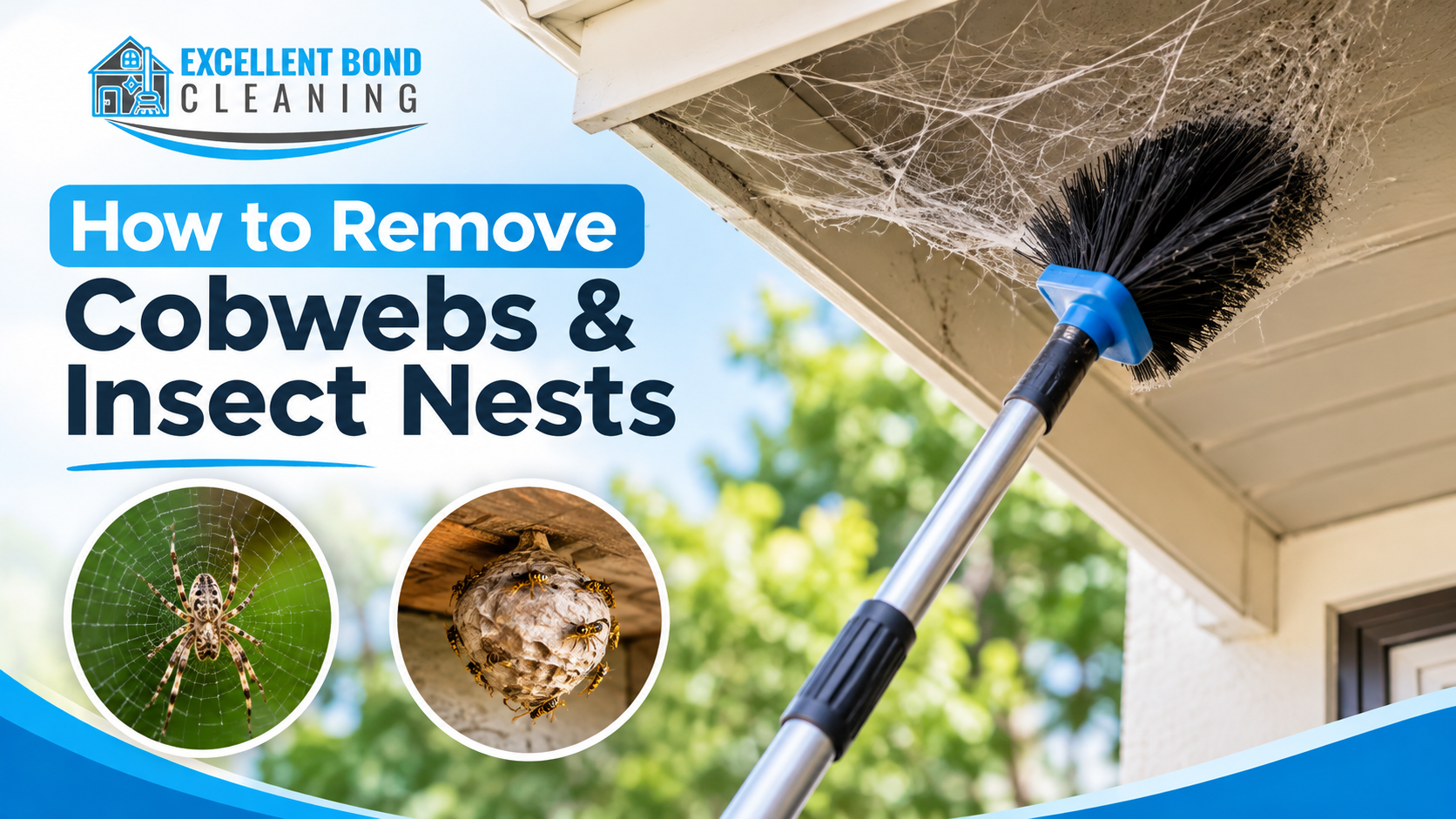
Cobwebs and insect nests are common problems in residential properties, particularly in areas that remain undisturbed for long periods. In Brisbane, the warm, humid subtropical climate can encourage spiders and other insects to become more active, making ceiling corners, window frames, garages, balconies and outdoor spaces potential hiding spots. Over time, these areas can accumulate spider webs, egg sacs and insect nests, affecting the cleanliness and overall appearance of a property.
Knowing how to remove cobwebs and insect nests safely is essential for maintaining a hygienic and well-presented home. Regular dusting, vacuuming and cleaning of hard-to-reach areas can help prevent these problems from recurring. With professional cleaning support from Excellent Bond Cleaning, Brisbane tenants can ensure their rental properties receive the detailed attention needed for a cleaner and more presentable finish. We offer other services like Bond cleaning Brisbane, Carpet Cleaning Brisbane, Pest Control Brisbane, End of Lease Cleaning, Exit Cleaning Brisbane and Pre Sale Cleaning. For more information regarding our wide range of cleaning services, you can call us at +61 47 828 6100 or email us at info@excellentbondcleaning.com.au.
What Are the Common Types of Cobwebs and Insect Nests Found in Brisbane Homes?
Generally, the warm weather and seasonal humidity levels in Brisbane allow several spiders and insects to flourish on and off residential properties. Knowing the various kinds of cobwebs and nests makes it easier for owners and tenants to decide on the best cleaning or pest control techniques.
1. Spider Webs in Ceiling Corners and Walls
Spider webs are often discovered in the corners of the ceiling, behind furniture, around cornicing and light fittings. The webs will trap dust and dead insects, making a room appear dirty and left.
2. Spider Egg Sacs
Spider Egg Sacs Small, papery, silk sacs occasionally attached to webs, furniture, ceilings or outside protected areas that are usually filled with many spider eggs. Never handle spider egg sacs with bare hands and call for advice if unsure whether the sacs are safe or not.
3. Paper Wasp Nests
Paper wasps typically form umbrella-shaped nests with small hexagonal cells on the underside. In Brisbane, you'll probably see nests hanging underneath eaves of your house and shed, and on outdoor patio furniture. As paper wasps can sting, nests should only be removed by licensed pest management experts.
4. Ant Nests
Ants will often form colonies in gardens, lawns, wall voids, in cracks and crevices around the foundations of buildings. Some species may also travel into food and storage areas of the home looking for water or food. Sealing food and cleaning up spills can help limit ant activity.
5. Mud-Dauber Wasp Nests
They make tiny mud nests that cling to protected surfaces such as walls of garages or sheds, walls and roof spaces, window frames, and outside walls. These nests can be seen as little tubes or clustered dried mud deposits. Mud-daubers tend to sting less readily than social wasps but occupied or unknown nests should be checked first.
How to Remove Cobwebs and Insect Nests Safely?
If you want to keep your home clean and hygienic, get rid of your cobwebs and insect nests regularly. Below are some practical methods to reach and remove both cobwebs and certain spider webs.
1. Use a Long-Handled Duster for Ceiling Corners
Spider webs can be found in corners, along the edges of ceiling plaster and around light fittings. Use a long-handled microfibre duster or cobweb brush to reach into all those corners and avoid stretching or climbing.
2. Vacuum Spider Webs from Walls and Hard-to-Reach Areas
The attachment hose for the vacuum cleaner can be used to clean out cobwebs, dust, and other loose debris in difficult to reach areas. It can be used to clean behind furniture or around cabinetry.
3. Clean Window Frames, Doors and Skirting Boards
They tend to gather dust and tiny cobwebs on the edges of your doors, as well as on the edges of your windows and skirting boards. It's also important to give these areas a quick clean during your end-of-lease clean.
4. Remove Accessible Outdoor Cobwebs from Balconies and Patios
Balconies, patios, and verandas can be good hiding spots for spiders as well as entry points to the home, which make regular cleaning an important technique to avoid these pests.
Inspect any available outdoor corners, railings and furniture.
5. Clean Garages, Sheds and Storage Areas
Garages and sheds are usually not part of house cleaning but they contain hidden corners, stored items and untouched areas can attract spiders and insects. Clear out any excess clutter and get your storage boxes organised.
What Cleaning Tools and Supplies Do You Need to Remove Cobwebs?
Cleaning equipment for removing cobwebs needs the right cleaning tools and supplies to get into those hard-to-reach places, lift dust off and clean surfaces without scratching or damaging them. Whether you're tidying up your Brisbane home, or a property you are renting out to tenants, you need the right tools for the job. Here's what you need to keep around.
1. Long-Handled Cobweb Duster
At the ceiling level, a cobweb duster with a long handle will help you reach all corners, mouldings, edges of walls and higher up. The soft bristles or microfibre head will also pick up spider webs and dust without scratching walls.
2. Vacuum Cleaner with Extension Attachments
A vacuum cleaner, with an extendable hose and brush, to reach corners and ceilings to eliminate cobwebs, dust and dead insects on ceiling corners, especially behind furniture and cupboards.
3. Microfibre Cleaning Clothes
Microfibre For use on surfaces such as window frames, door edges, skirting boards etc after you've blown the cobwebs down. Microfibre can pick up a lot of dust and is used with water or a household cleaning product.
4. Soft Cleaning Brushes
Brushes with soft bristles will loosen persistent webs and dust build-up on textured walls, in doorways and frames, in window tracks and in small corners. Select brushes that are suitable for the surface.
5. Mild Household Cleaning Solutions
Dust and spot removal Use a cleaning product compatible with the surface type to remove the residue left after the cobwebs have been cleared, including dirt, dust and marks. Carefully follow the manufacturers instructions.
How Can You Prevent Cobwebs and Insect Nests from Returning?
Keeping up with your regular cleaning and outside property maintenance can help lower the risk of new webs and nests. Here are some effective tips to prevent cobwebs and insect nests from coming back.
1. Clean Ceiling Corners and Hidden Spaces Regularly
They prefer to build their webs in low-traffic areas so that they are not disturbed. Cornices, behind furniture and storage spaces in particular should be on your to-do list when vacuuming.
- Regularly dust corners of ceiling and walls.
- Sweep away neglected spider webs with a long-handled duster.
- Dust off behind wardrobes, shelves and large pieces of furniture.
- Observe garages, storerooms and laundry.
2. Seal Gaps Around Windows, Doors and Walls
Gaps between doors, windows and around the exterior of your home may lead to the outside. Fill these gaps to keep pests from entering your home.
- Look for cracks around window frames and doors.
- Fix weather stripping and door seals.
- Place door sweeps at the bottom of the door, you have gaps.
- Fill smaller holes around utility and pipe entry points with the suitable materials.
3. Install and Maintain Window and Door Screens
Flying Screens & Insect Screens for flies and other insects are an effective way of preventing flying insects and other pests. As spiders tend to follow the food supply of insects, there is every chance that keeping down the number of insects may prevent spiders from settling.
- Patch up holes and tears in window screens.
- Keep screen doors properly fitted.
- Check gaps around screen frames.
- Clean screens often as dust dirt can accumulate.
4. Reduce Outdoor Lighting Near Entry Points
Flying insects are drawn to lights on the outside of a home which can lead to spiders setting up shop near doors, windows and balconies. With a few modifications to outdoor lighting, the attraction of insects can be eliminated.
5. Keep Gardens, Lawns and Outdoor Spaces Maintained
Overgrown vegetation, leaves and debris around your property can offer excellent hiding spots for spiders and insects. Regular outdoor maintenance will help reduce these hiding areas.
Conclusion
Warm weather and seasonal humidity create the perfect environment for spiders and bugs to settle in corners of the ceiling, garages, balconies, window panes and outdoor areas. As part of the end of lease cleaning for tenants, clearing away visible cobwebs and cleaning out unproductive or neglected spaces will help the property. Bond Cleaning offers professional bond cleaning in Brisbane and can support tenants with the sometimes-arduous task of preparing the property for a final inspection, including those spots that are usually neglected. For more information regarding our wide range of cleaning services, you can call us at +61 47 828 6100 or email us at info@excellentbondcleaning.com.au.
Frequently Asked Questions (FAQs)
1. How often should you remove cobwebs from your Brisbane home?
You need to make sure you check and clean any obvious cobwebs at least a few times a month, but some places like garage, ceiling corners, balconies and outdoor areas might need a little more maintenance, especially in the warmer months.
2. How can I best get rid of cobwebs on the ceilings?
The most simple way of removing webs from high ceilings is a long-handled microfibre duster or cobweb brush. Use a vacuum cleaner with extension attachment to suck the webs and the dust away without climbing unnecessarily.
3. What can I do to stop spiders from building webs inside my house?
Regularly vacuum ceiling corners, window frames and hard to reach places to deter spiders. Sealing up gaps around doors and windows, installation of insect screens, and cutting back on clutter and insect activity outside can all help prevent spiders moving indoors.
4. Can I remove the wasp nests from my home in Brisbane?
No, don't try and remove active nests on your own. Wasps get very aggressive when their nest is broken up and their sting can be very painful.
5. Should cobwebs be removed during end-of-lease cleaning in Brisbane?
Yes, you should vacuum out the webs as part of the final presentation for the inspection. Look in corners of the room, cornices, lintels, garage, window frames, balcony and other places where the webs might be hanging.
6. Does professional bond cleaning include cobweb removal?
Cobweb removal is usually a part of the more comprehensive bond cleaning jobs and often designed into the detailed bond cleaning itself (although this varies from company to company).
Latest Post
- How to remove cobwebs and insect nests
- How To Remove Mould In Brisbane’s Humid Climate
- Bond Cleaning Acacia Ridge
- How Professional Cleaners Remove Limescale, Soap Scum, and Mineral Buildup
- How Professionals Clean Blind Slats, Skirting Boards, and Light Fittings Properly
- Hidden Bond Cleaning Costs in Brisbane: Carpet, Oven, Pest Control & Windows Explained
- Eco-Friendly vs Chemical Disinfectants: What Brisbane Bond Cleaners Choose and Why
- Bond Cleaning in Older Queenslanders vs New-Build Apartments: What's Different
- Bond Cleaning Before or After Furniture Removal? Getting the Order Right
- What Products and Equipment Do Professional Bond Cleaners Use in Brisbane?
- What's Included in a Move-Out Pest Treatment in Brisbane & What's Not?
- Why Is Bond Cleaning So Much More Expensive Than A Regular Clean
- Can You Do Bond Cleaning Yourself In Brisbane? Pros And Cons
- Bond Cleaning for a 1, 2, 3 & 4 Bedroom Property: Cost Comparison
- Why Combining Bond Cleaning And Pest Control Saves Time & Money


